
In Central Texas, harsh freeze-thaw cycles, high winds, and drought stress routinely cause significant damage to trees. When the damage is severe, large open cracks and hollow cavities form, exposing the tree’s internal structure to wood rot, fungi, and wood-boring insects. Left untreated, this degradation compromises the stability of the tree, increasing the risk of major limb loss or complete collapse.
At Wilder Tree Company, we provide targeted evaluations and tree crack repair services to homeowners across Central Texas. Our team assesses the internal decay and structural integrity of the cracked tree to determine whether tree trunk repair is necessary.
Unsure if your tree needs repair? Contact us online for a free estimate, or call us directly at (512) 729-8733 to speak with our local team.
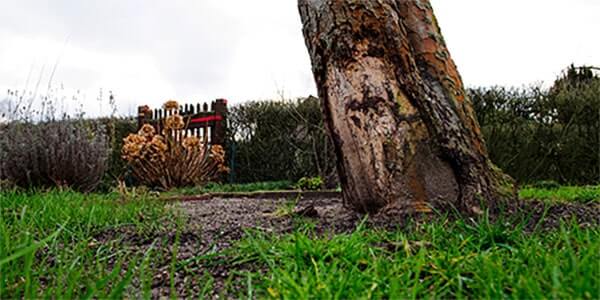
What You Need To Know About Tree Crack Repair
- Cavities only need treatment if they trap moisture or fail to seal naturally.
- Vertical splits caused by freezes, drought, or lightning get worse over time, requiring specialized tree crack repair.
- Professional repairs support your tree’s natural healing response rather than replacing it.
- Open oak wounds attract sap-feeding beetles, requiring urgent sealing.
- Rigid concrete accelerates internal decay; flexible expanding foam is the industry standard.
What Causes Large Holes and Cracks in Tree Trunks?
Understanding where trunk damage comes from is the first step in choosing the right tree hole repair strategy. This also ensures that your tree receives the proper post-repair care it needs.
How Does a Hole in a Tree Trunk Form?
Most cavities form because of improper pruning. When a branch is removed with a flush cut that damages the branch collar, the tree struggles to form callus tissue over the wound. Over time, internal moisture collects and decay fungi spread inward, creating a hollow space inside the trunk.
Wood-boring insects speed up this structural decay. Pests target heat-stressed or drought-weakened trees, chewing through bark and openings in the tree trunk. In Austin’s urban environment, where compact clay soils and triple-digit summer temperatures strain roots, this combination of environmental stress and pest activity creates ideal conditions for rapid cavity expansion.
What Causes a Crack in a Tree Trunk?
A vertical crack in a tree trunk usually stems from extreme climate conditions common to Central Texas:
- Freeze-Thaw Cycles: Water inside the wood expands rapidly during sudden freezes, splitting bark and heartwood.
- Frost Cracking: Sun-warmed winter afternoons followed by freezing overnight temperatures cause outer bark to contract faster than inner wood, producing deep vertical splits.
- Lightning Strikes: Lightning boils internal sap instantly, sending steam pressure bursting through the bark.
- Construction Stress: Soil compaction from heavy machinery stresses root systems, causing internal tension that can lead to trunk fractures.
When Does Tree Trunk Damage Require Repair?
Trees heal through a natural process called compartmentalization. They grow new wood around the damaged area, isolating the decay. While small surface cracks often close on their own, intervention is often necessary when the damage is significant.
Below are some recommendations on proper actions to take based on the type of tree trunk damage:
|
Damage Type |
Recommended Action |
|
Small crack with smooth, closed edges |
Monitor only; no repair needed |
|
Hole sealed over by callus tissue |
No action required |
|
Hole trapping water and resisting natural closure |
Fill to prevent internal rot |
|
Jagged vertical crack that will not close |
Professional repair recommended |
|
Any open wound on an oak tree |
Seal immediately (Oak wilt risk) |
|
Visible rot, soft wood, or fungal growth inside |
Urgent arborist-assisted assessment needed |
How Wilder Tree Company Repairs Tree Trunk Damage
Whether performing a tree hole repair or stabilizing a dangerous split, our treatments are centered on supporting the tree’s natural healing at every step. Here’s how our crew approaches tree trunk damage:
- Assessment and Diagnosis: Our team evaluates the full scope of damage before starting work, checking for hidden rot, pest activity, and structural compromises. For oak trees, we check for early oak wilt symptoms, especially between February and June when sap-feeding Nitidulid beetles are most active in Central Texas.
- Cleaning and Preparation: To remove the moist environment that fungi need to thrive, we carefully clean out decayed material, smooth wound margins, and trim away loose bark. If a tree proves unviable or structurally unsafe, tree and stump removal services are available.
- Filling, Curing, and Sealing: We fill prepared cavities with high-grade expanding foam, which flexes with natural trunk movement. Once cured, we shape it flush, apply protective sealant, and coat it with bark-matching paint. For larger commercial sites or residential estates, our commercial and HOA tree services team manages these maintenance protocols across entire properties.
- Structural Support Where Needed: For severe structural splits, we evaluate whether supplemental tree cabling and bracing are necessary to secure heavy limbs while the trunk heals.
For immediate hazards caused by sudden storms or split trunks, our emergency tree services team is on standby to secure your property.
Supporting Your Tree After Repair
Once the physical wound is repaired, the next step is to protect the tree against Austin’s harsh climate conditions and pests to ensure full recovery.
The combination of alkaline soils, prolonged droughts, and erratic freezes creates chronic stress cycles. Weakened oaks, pecans, and elms often fall prey to Hypoxylon canker, a native fungus that turns destructive when trees are dehydrated. Oak trees are also susceptible to oak wilt, which spreads via beetles drawn to fresh wounds and cracks.
To help improve recovery after repair:
- Prune Strategically: Pruning and removing deadwood helps the tree redirect energy toward callousing over wounds and avoid new decay.
- Feed the Roots: Compacted local soils lack vital nutrients. Deep root fertilization provides essential nutrients, promoting healthy root and cellular growth.
- Mulch Properly: Apply a 3- to 4-inch ring of organic mulch around the base (keeping it clear of the trunk) to retain moisture through hot summer months. Combine with a slow, deep root soaking every two weeks during hot summer dry spells to minimize internal trunk pressure and stress.
To view our complete line of tree care solutions, explore our tree healthcare services.
Frequently Asked Questions
Can a cracked tree trunk seal on its own?
Yes, trees often heal minor cracks by growing callus tissue over the wound. However, deep splits with jagged edges or open cavities that trap water outpace natural healing, requiring professional care to prevent structural rot.
Is it safe to fill a hole in a tree trunk with concrete?
No. Concrete does not flex with natural tree movement. Over time, it creates severe pressure points that expand cracks and accelerate internal decay. Modern flexible foam materials are far safer and more effective.
How do I know if a tree trunk crack is dangerous?
Cracks extending deep into the core, splits near major trunk unions, or cavities accompanied by mushrooms indicate serious structural instability that requires immediate arborist-led review. If assessment reveals a tree is beyond repair or poses a safety risk, tree removal services are available to ensure a safe, fast response.
Does sealing a wound on an oak tree prevent oak wilt?
Yes. Sealing fresh wounds on oak trees creates a barrier against nitidulid beetles, which spread oak wilt spores. All oak wounds should be sealed immediately, regardless of the season.
How quickly should I act after noticing trunk damage?
As soon as you observe a crack or hole that is not closing, shows signs of rot, or exposes oak wood during warm months. Early intervention is almost always less complex and less costly than addressing advanced decay after it has had time to spread through the wood.
What does tree trunk repair cost?
Pricing varies based on wound size, tree species, site accessibility, and the extent of preparation required. All estimates are free and provided before any work begins. Key cost factors include whether structural cabling hardware is needed, the volume of expanding foam and sealant required, and whether companion services like deadwood pruning or root fertilization are bundled into the plan.
Protect Your Trees With the Right Repair
A hollow cavity or a worsening crack in a tree trunk will not resolve itself once decay takes root. Whether you need tree crack repair on an historic live oak or want an expert opinion on a split cedar elm, our team brings local experience to every job.
At Wilder Tree Company, we provide tree trunk repair and crack repair services across Austin and surrounding communities. Every project is backed by certified arborist knowledge and a commitment to the health and care of the Central Texas landscape.
Contact us today for a free estimate, or call (512) 729-8733 to speak to our team.